We have two sets of teeth during life: 20 temporary baby teeth and 32 permanent adult teeth.
Birth – 3 Years Old3 – 6 Years Old6 – 12 Years Old12 – 17 Years Old17 – 21 Years Old
Birth – 3 Years Old
The 20 baby teeth that will appear in the first 3 years of your baby’s life are already there at birth, in your baby’s jawbones. Baby teeth are key for chewing, speaking and appearance. They also hold space in the jaws for upcoming adult teeth. Even though they fall out, your child’s baby teeth are important, and you need to take good care of them.
From around ages 6 - 12, children gradually lose their baby teeth and their adult teeth start to appear.
The first adult teeth to come in are molars. These first molars are important because they help shape your child’s face and affect the position and health of the other adult teeth that are about to arrive.
Cavities aren’t just for little kids—you can get them at any age. When you eat sugary foods and drink sugary sodas, juice or energy drinks, you put yourself at risk for tooth decay and gum disease. Good oral hygiene is especially important for people wearing braces. And it’s always important to wear a mouthguard when playing sports like basketball, soccer, football and hockey.
17 – 21 Years Old
The last teeth to appear are wisdom teeth at around ages 17 – 21. By age 21, all 32 of the adult teeth have usually appeared.
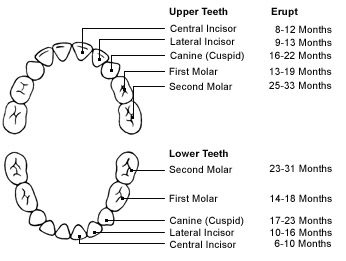
Baby teeth usually appear when your baby is 6 months – 1 year old. The Partnership for Healthy Mouths, Healthy Lives recommends a dentist examine your child no later than their first birthday. Besides checking for tooth decay and other problems, the dentist can show you how to clean the child's teeth properly and how to deal with any issues like THUMB SUCKING.
Why do Babies Teethe?
Baby Teeth Chart
Baby Teeth and Teething Tips
When babies are teething, they may become fussy, sleepless and irritable, lose their appetite or drool more than usual. Diarrhea, rashes and a fever are not normal for a teething baby. If your baby has a fever or diarrhea while teething or continues to be cranky and uncomfortable, call your doctor.
Babies may get sore or tender gums when their teeth cut their gums. Gently rubbing your child’s gums with a clean finger, a small, cool spoon or a wet gauze pad can soothe them. A clean teething ring may also help.
When baby teeth break through the gums, brush the teeth with a soft-bristled toothbrush and a little water to prevent tooth decay. Fluoride toothpaste is not recommended until a child reaches age 2.
Ages 2 and up: help young children brush their teeth and teach them to spit out the fluoride toothpaste. They shouldn’t swallow it.
Begin regular dental checkups no later than your child’s first birthday for “smile” insurance.